Saturday, March 24, 2012

Wednesday, March 14, 2012
The Little Telescope that Could
The Wide Field Infrared Survey Explorer (WISE) is a small (0.4 meter diameter) infrared space telescope. The cost was relatively modest ($320 million) as far as space missions go. It was put into orbit to do one thing only, slowly and steadily map the entire sky in the mid-infrared (3-30 microns).
The mission was a spectacular success. The final images and catalogs over the entire sky were released today. Below is an annotated version of the all sky map. But if you want to play with a really high resolution image, follow this link.

WISE has been great for studying low-mass stars and dusty regions of the Milky Way, but it's also really good at finding asteroids. Check out this video to see how many it has found.
The mission was a spectacular success. The final images and catalogs over the entire sky were released today. Below is an annotated version of the all sky map. But if you want to play with a really high resolution image, follow this link.

WISE has been great for studying low-mass stars and dusty regions of the Milky Way, but it's also really good at finding asteroids. Check out this video to see how many it has found.
Sunday, March 11, 2012
Doomsday
There's a lot of crazy misinformation out there, and physicists should be well informed and be able to address them.
"Extraordinary claims require extraordinary evidence." - Carl Sagan
"Extraordinary claims require extraordinary evidence." - Carl Sagan
Wednesday, February 29, 2012
Monday, February 20, 2012
A Big Camera
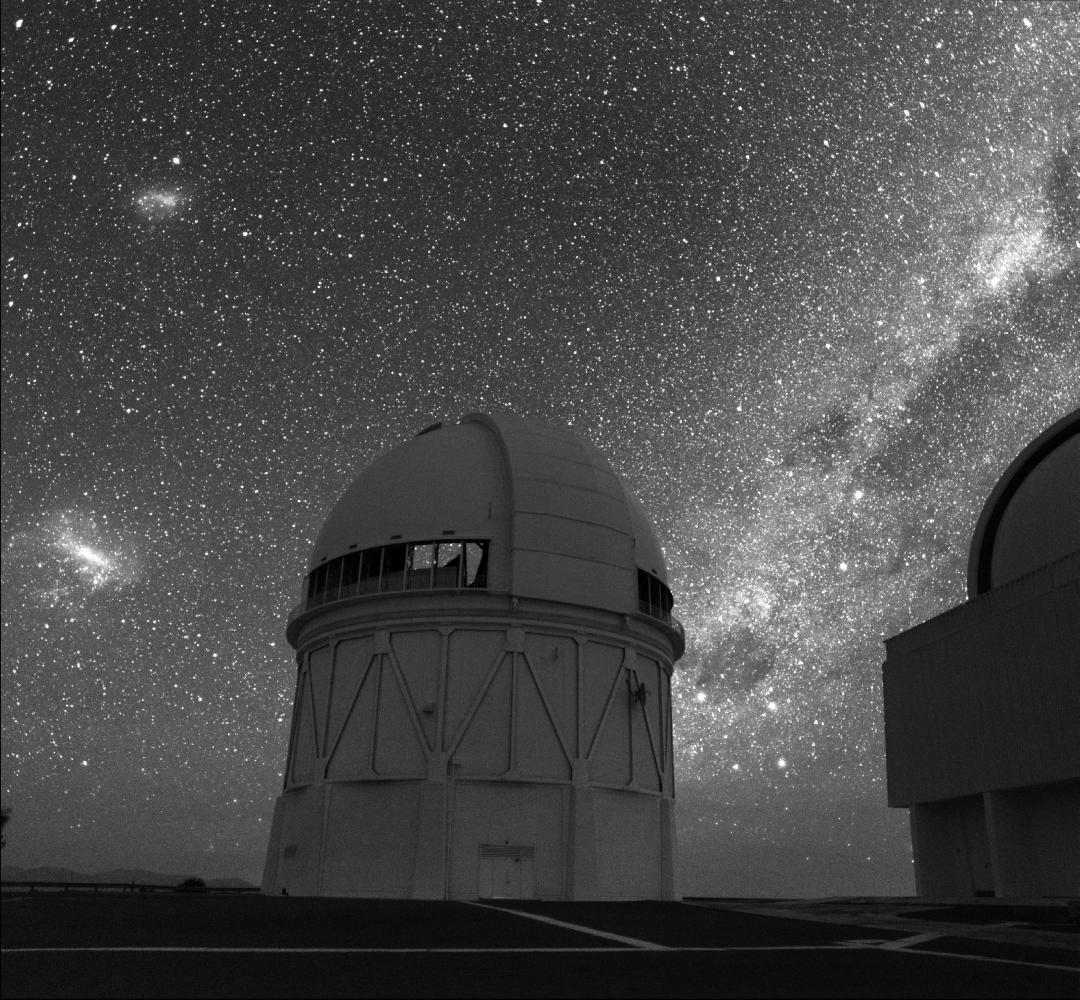
The Dark Energy Camera, the largest camera in the world is being installed on a 4-meter telescope in Chile (photo below). It's goal, over the next 2-3 years, is to measure properties of dark energy. There's a good write-up in the Economist.

Tuesday, February 14, 2012
Science is Hard.
A great post by Adam Frank at the 13.7 blog on NPR:
Also, I liked the discussion of the "math-science death march" that first year college students are subjected too.What is true for science is also true for the other great human endeavors.To engage with the world in search of any kind of Truth is an expression of the search for excellence. That, by its very nature, is desperately difficult. There will always be a price to be paid in time, sweat and tears. We should never sugarcoat that reality.We want to teach students more than just how to get jobs, we also want to teach them how to live with depth and for purposes that stretch beyond their own immediate interests. We should never forget that connection. If we do, we are in danger of losing more than just the next generation of science majors.
Subscribe to:
Posts (Atom)